Midnight in Madrid and Warren Buffett
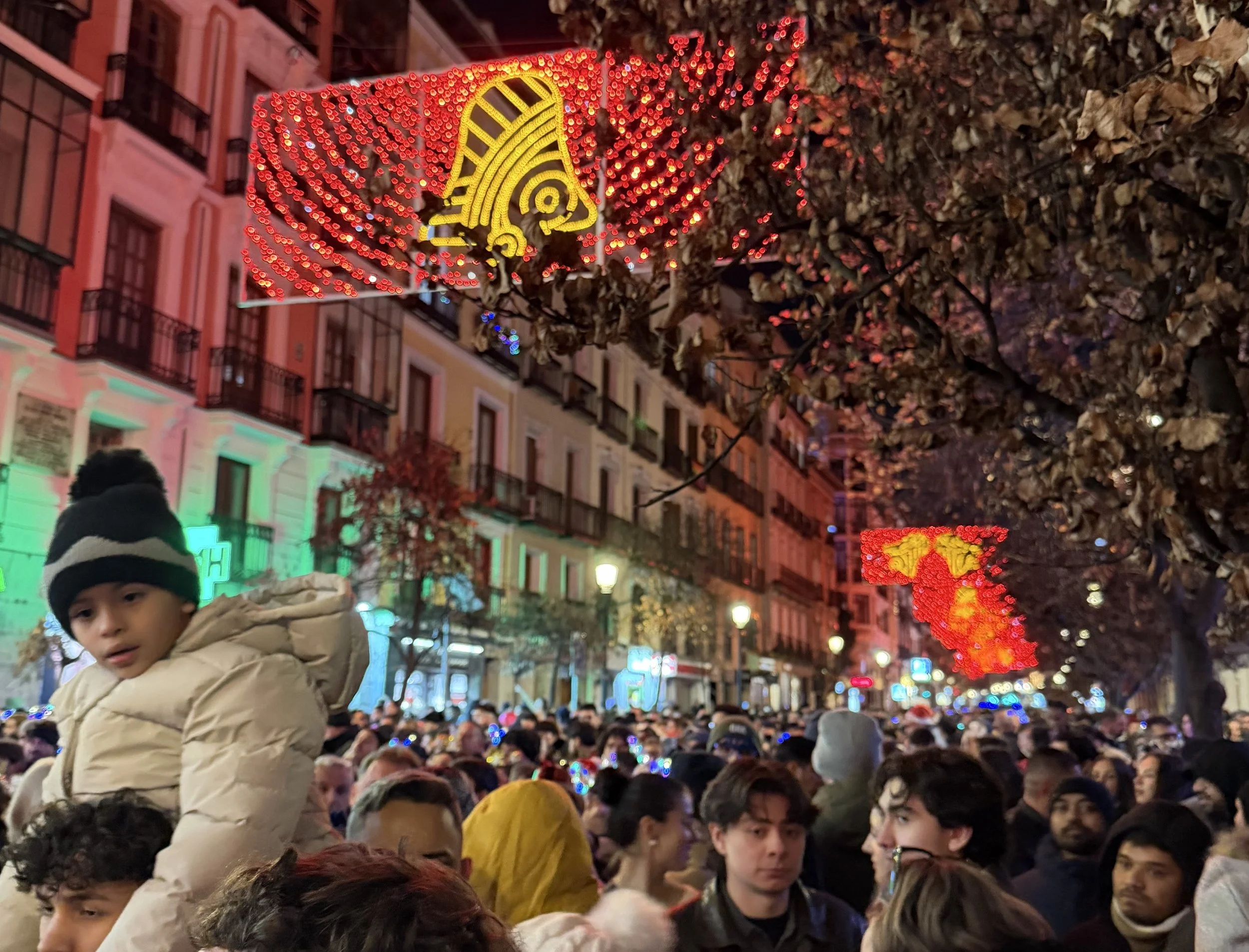
On New Year’s Eve in Madrid, we stood in a dense crowd blocks away from Puerta del Sol, hoping we were close enough to feel part of it.
We had arrived around 10 pm, thinking we were early.
We weren’t.
By then the plaza itself was already packed, so we ended up in a side street with hundreds of other people, craning our necks toward a clock we couldn’t see and waiting for chimes we wouldn’t be able to hear. We had two hours to stand there and hope we were roughly in the right place.
My fourteen-year-old daughter and I had our twelve grapes ready to eat. One for each chime. At least, that was the plan.
Somewhere in those two hours of waiting, I mentioned that it was Warren Buffett’s last day at Berkshire Hathaway.
She looked at me blankly.
“Who’s Warren Buffett?”
For a split second, I felt like I had failed her as a parent.
For so many years, he’s been a constant presence in my professional life — quoted, studied, referenced. And yet here we were, entering a new year, and he was simply… unknown.
So I told her he was one of the greatest investors of all time and that he lived in Omaha, Nebraska.
That seemed sufficient for a crowded street at 10:30 p.m.
Later, still waiting for a signal we wouldn’t hear, the conversation drifted to gold.
“Oh yeah,” she said confidently. “Gold is a great investment.”
My insides knotted up again. Clearly I had a lot to teach this kid.
She had heard that somewhere — probably in a headline or a clip. And she wasn’t wrong. Gold can look appealing, especially when people feel uncertain.
But that’s how most people think about investing.
They think in headlines.
They think in what sounds safe.
They think in what seems to be shining at the moment.
So I tried to explain something harder to see.
Yes, gold can do well in certain environments. But over the long haul, gold has been a relatively poor investment compared to stocks — companies that innovate, hire people, create products, generate cash flow, and reinvest.
Gold sits. It shines. It doesn’t produce.
Buffett has famously avoided gold for that reason. He prefers owning stocks — pieces of businesses that grow over time — rather than objects that simply reflect fear or scarcity.
And as I was explaining this, something clicked for me.
In some ways, Buffett might have been the original yogi of finance — though I doubt he ever had much of a backbend. He’s also been one of my greatest teachers, even though I’ve never had the honor of meeting him. Not because he practiced asana, but because of his temperament.
Patience.
Non-reactivity.
Clarity about what matters.
The ability to ignore noise.
In yoga, we talk about observing the fluctuations of the mind without being pulled into every wave. About staying grounded when circumstances shift. About resisting the urge to grasp at what looks appealing in the moment.
Gold is, in many ways, the ultimate shiny object.
It appeals to fear. To scarcity. To the idea that safety lies in holding something tangible and gleaming.
Buffett built his life around something quieter.
He bought stocks and held them. He didn’t chase what was fashionable. He didn’t try to win the year. He let time and discipline do the heavy lifting.
That kind of restraint is rare.
Eventually, people around us started shouting. We assumed the chimes had begun.
We tried to shove the grapes into our mouths all at once. Impossible.
No one knew what the rhythm was. Some people laughed. Others tried to space them out. We were guessing, reacting, following the crowd because we had no signal to anchor to.
It’s hard to stay steady when you can’t hear the clock.
Standing there, slightly confused and laughing, I realized this essay is probably more for me than for her.
Someday, if she’s curious enough to read it, maybe she’ll understand why he mattered — at least in my world.
Not because he was rich or famous, but because he built something slowly. Because he didn’t seem particularly interested in shiny things. Because he trusted time more than headlines.
The new year arrived whether we got the grapes right or not.
Eventually, she’ll form her own views about money, risk, and what matters.
For now, it was enough to stand in a crowded street, miss the chimes, eat too many grapes at once, and talk about an investor she’d never heard of.
That felt like a decent way to start the year.