From Mat to Money: My Conversation on the Finding Harmony Podcast
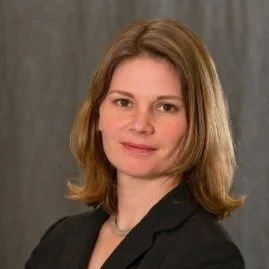
I recently had the pleasure of sitting down with Harmony and Russell on the Finding Harmony Podcast to talk about something that doesn't get discussed nearly enough: the intersection of spiritual practice and financial life.
If you've ever thought "I'm spiritual, so I shouldn't care about money," or felt completely frozen when it comes to investing, this conversation is for you. And if you missed it, I wanted to share some of what we explored together.
Wealth as Energy, Not Just Numbers
One of the first things we talked about was reframing wealth. Not as a number in a bank account, but as energy—the capacity to make choices, to support what matters to you, to create space in your life for practice and presence.
For too long, I've watched spiritual practitioners treat money as something separate from their values, or worse, as something inherently corrupt. But money is neutral. It's a tool. And like any tool, it can be used skillfully or unskillfully.
My Path: Physics, Finance, and the Berkshires
Harmony and Russell asked me to share my story, which I don't always do publicly. I started off studying physics in college before switching to an economics major and then moved into finance in New York City. I was there on September 11th, 2001, navigating my first bear market while the world shifted beneath us.
That experience changed everything. It clarified what mattered and what didn't. It led me deeper into my Ashtanga practice, which I've now been dedicated to for over 20 years. Eventually, it brought me to the Berkshires, where I built a Mysore shala in our renovated barn where our office sits upstairs from the yoga studio and continue to guide clients through market volatility while keeping both eyes on what truly matters to them.
The Emotional Baggage Spiritual People Carry About Money
We spent a good amount of time unpacking the complicated relationship many spiritual folks have with finances. There's this pervasive idea that caring about money means you're materialistic, that investing is somehow participating in a corrupt system, that wealth and spiritual development are incompatible.
But here's what I've learned through decades of practice and decades of financial planning: ignoring money doesn't make you more spiritual. It just makes you more anxious.
Your financial life is part of your practice. It requires the same attention, discipline, and intention you bring to your mat. And when you approach it that way—with presence rather than avoidance—everything shifts.
Investing in Alignment with Your Values
One question that always comes up: "How do I invest in a way that matches my values?"
The good news is that it's more possible now than ever before. ESG (environmental, social, and governance) investing has matured significantly. You can choose funds that screen for companies meeting certain ethical standards. You can vote as a shareholder on proposals that matter to you.
But more fundamentally, we talked about matching your investment strategy to your time horizon. If you're investing for retirement 20 years from now, your approach should look very different than if you need the money in two years. Understanding this removes so much of the fear and confusion.
Diversification: The Financial Equivalent of a Balanced Practice
I loved this analogy that emerged in our conversation: diversification is like a well-balanced yoga practice.
You wouldn't only do forward folds and ignore backbends. You wouldn't only practice standing poses and skip inversions. A complete practice includes variety, balance, and attention to different aspects of the body.
The same is true in finance. You don't put all your money in one stock or one sector. You spread it across asset classes, geographies, and strategies. Not because you're hedging your bets, but because you're building resilience.
Reframing Capitalism, Retirement, and Freedom
Toward the end of the conversation, we tackled some of the trickier questions: What about capitalism? What about ethical concerns with investing in corporations? What does retirement even mean for someone whose work feels like dharma?
My answer is always this: these are important questions, and they deserve thoughtful answers. But they shouldn't paralyze you.
Retirement isn't about stopping work. It's about having the freedom to choose. To teach because you want to, not because you have to. To take a year off for intensive study. To say no to projects that don't serve you.
And as for capitalism—you're already participating in it every single day. The question isn't whether to engage with the system. The question is: do you want to sit on the other side of the table for once, as an owner rather than only a consumer?
Money as Part of Practice, Not Separate From It
If there's one thing I hope people take away from this conversation, it's this:
Your financial life doesn't have to be something you do "over there," separate from your values and your practice. It can be integrated. It can be intentional. It can be approached with the same mindfulness you bring to everything else.
You don't need to be perfect. You just need to begin. To breathe. To stop treating money as the enemy and start treating it as energy you can direct toward what matters most.
If this resonates with you, I'd love for you to listen to the full conversation. Harmony and Russell asked questions I don't usually get asked, and the result was a conversation I'm genuinely proud of.
And as always, if you have questions or thoughts, drop them in the comments or reach out. I'm here.
🙏
If you’d like to read more about my perspectives on yoga and finance, please visit and follow me at yogaandfinance.com